Terror at Bondi: Australia Mourns 15 Lives Lost in Deadliest Antisemitic Attack in Decades

Sydney, Australia – The sun-drenched promenade of Bondi Beach became the scene of Australia’s deadliest terror attack in nearly three decades when two gunmen opened fire on families celebrating the first night of Hanukkah on Sunday evening, 15 December 2025. The coordinated assault claimed 15 lives and wounded 42 more, shattering Australia’s sense of security and forcing the nation to confront an alarming surge in antisemitic violence.
The attack, which authorities have confirmed was inspired by Islamic State ideology, marks the second-deadliest mass shooting in modern Australian history behind the 1996 Port Arthur massacre. For Australia’s 120,000-strong Jewish community, concentrated heavily in Sydney’s eastern suburbs, the bloodshed represents a terrifying escalation of threats that have intensified dramatically since October 2023.
Among the dead was Peter Meagher, a 61-year-old retired Detective Sergeant who served the New South Wales Police Force for 35 years. Meagher was working as a freelance photographer, documenting the “Chanukah by the Sea” celebration when the gunmen struck. His family released a statement on Wednesday expressing the cruel irony of his death.
“The tragic irony that Peter spent so long in the dangerous front line as a police officer and was struck down in retirement while pursuing his passion for taking photos is hard for us to comprehend,” the statement read. “He was a cherished brother, husband and uncle whose kindness, generosity and love touched everyone who knew him.”
The Attack Unfolds
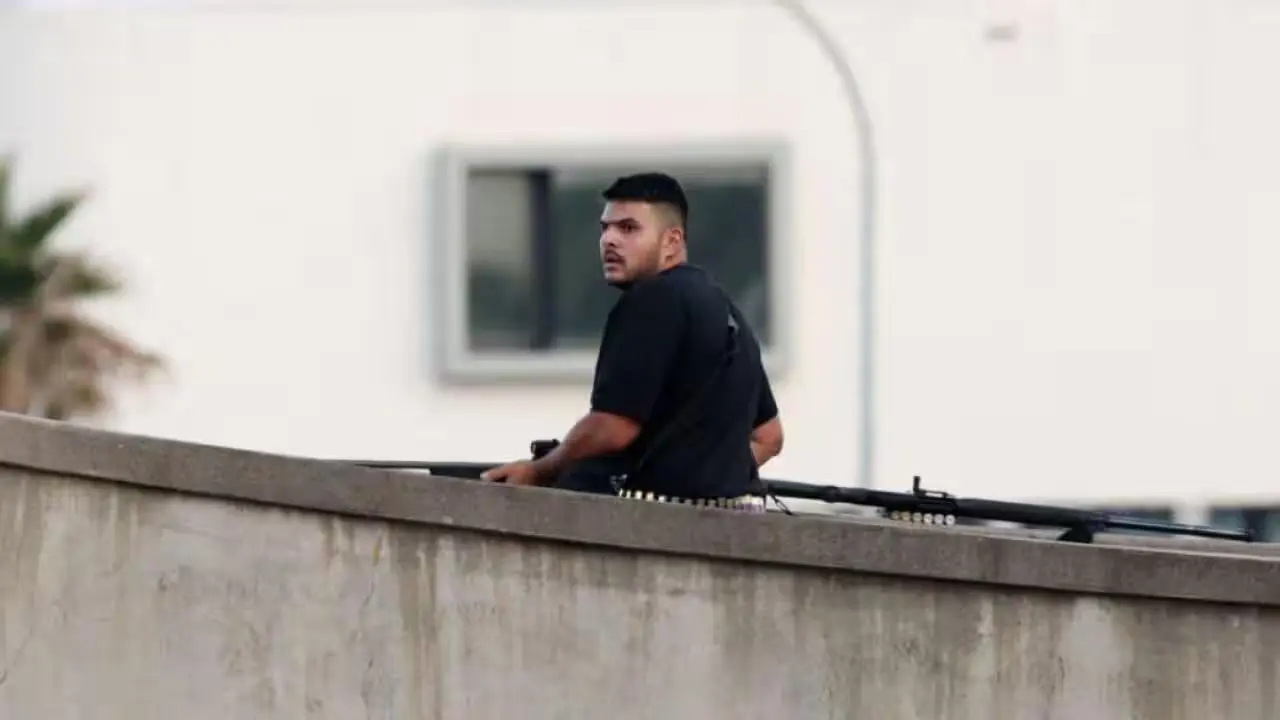
Shortly after 6:00 PM on Sunday, as approximately 300 people gathered at Bondi Pavilion for a community Hanukkah celebration, two gunmen positioned themselves on an overpass bridge overlooking the event. According to witness accounts and intelligence briefings, the attackers shouted “Allahu Akbar” before opening fire with multiple weapons on the crowd below.
The gunmen have been identified as Sajid Akram, 50, and his son Naveed Akram, 24. The father was shot dead by police at the scene. The son was critically wounded, emerged from a coma on Tuesday, and was formally charged on Wednesday with 59 offences, including 15 counts of murder, one count of committing a terrorist act, and 40 counts of attempted murder. His court date has been set for 8 April 2026.
The victims ranged from 10-year-old Matilda Britvan to 87-year-old Alexander Kleytman, a Holocaust survivor who died shielding his wife from bullets. Among the dead were three Chabad rabbis, including Eli Schlanger who organised the event and left behind a wife and five children. Also killed were French footballer Dan Elkayam, Slovak citizen Marika Pogany, and Israeli national Tibor Weitzen. As of 16 December, 24 people remained hospitalised.
Amidst the carnage, several individuals displayed extraordinary courage. Ahmed al-Ahmed, a Syrian Australian bystander, wrestled a shotgun from one of the attackers and turned the weapon on the gunman. Prime Minister Anthony Albanese visited al-Ahmed in hospital, praising him as representing “the best of our country.” Boris and Sofia Gurman, a Russian-Jewish couple aged 69 and 61, died attempting to disarm one of the gunmen, with dashcam footage capturing their final heroic moments.
A Carefully Planned Attack
Investigators have revealed disturbing details suggesting extensive planning. Albanese confirmed on Tuesday that the father and son travelled to the Philippines in the weeks before the attack, with preliminary evidence indicating inspiration from the Islamic State terrorist organisation.
Sajid Akram was a member of a registered gun club and possessed at least six licensed firearms, which police believe were used in the attack. Despite Australia’s strict gun control laws, he had accumulated his arsenal legally, raising urgent questions about licensing procedures.
Naveed Akram had been known to intelligence officials since 2019 but was deemed “not an immediate threat.” As a teenager, he followed radical Islamic preacher Wissam Haddad, who was found guilty of violating Australia’s racial hatred laws in 2025. The Australian Security Intelligence Organisation is now conducting an urgent review of threat assessments.
A Community Under Siege
The Bondi attack represents the violent apex of an unprecedented wave of antisemitic incidents sweeping Australia. According to the Executive Council of Australian Jewry, Australia recorded 2,062 antisemitic incidents between October 2023 and September 2024 – a 316.5% increase from the previous year. Whilst the following year saw a slight decline to 1,654 incidents, this remains approximately five times higher than pre-October 2023 levels.
Antisemitic Incidents in Australia (October 2023 – September 2025)
| Period | Total Incidents | Year-on-Year Change | Serious Incidents |
|---|---|---|---|
| Oct 2022-Sept 2023 | 495 | Baseline | Low |
| Oct 2023-Sept 2024 | 2,062 | +316.5% | Moderate |
| Oct 2024-Sept 2025 | 1,654 | -19.8% | Highest on Record |
Source: Executive Council of Australian Jewry
Breakdown by Incident Type (Oct 2024 – Sept 2025)
| Type | Number | Percentage |
|---|---|---|
| Verbal Abuse | 621 | 38% |
| Graffiti | 350+ | 21% |
| Vandalism | 33 | 2% |
| Physical Assault | 24 | 1.5% |
The community has endured a relentless series of attacks. In December 2024, the Adass Israel Synagogue in Melbourne was firebombed. In January 2025, authorities discovered a caravan filled with explosives in Sydney, sufficient to destroy structures up to 40 metres away. In August 2025, Albanese revealed that Australian intelligence linked Iran’s government to arson attacks on Jewish institutions, prompting Australia to expel Iran’s ambassador.
Avner’s Bakery: A Symbol of Fear
Perhaps no single incident better captures the climate of fear than the permanent closure of Avner’s Bakery, announced immediately after the Bondi attack. The popular Jewish bakery in Surry Hills had become a symbol of Jewish visibility and cultural pride.
On Wednesday morning, a handwritten notice appeared in the bakery’s window: “The world has changed. Our world has changed. In the wake of the pogrom at Bondi one thing has become clear – it is no longer possible to make outwardly, publicly, proudly Jewish places and events safe in Australia.”
Owner Ed Halmagyi, a well-known television chef, revealed that after Sunday’s attack, his first task was removing stickers bearing slogans such as “Jews kill babies” from the bakery’s exterior. The establishment had endured nearly two years of antisemitic harassment, vandalism and intimidation. Even after the massacre, threats continued.
“As an open and very public business that operates at all hours, we are unable to ensure the safety of our staff, our customers, our families,” the notice stated. “And so we have made the only decision available, one that truly breaks our hearts. Avner’s is closed.”
By Wednesday afternoon, supporters had left flowers and notes outside the shuttered bakery. The closure has become a potent symbol of how antisemitic violence is forcing Jewish Australians to reconsider their place in a country they once considered safe.
Government Response and Legislative Action
The attack has triggered intense political responses. Albanese described the shooting as “a targeted attack on Jewish Australians on the first day of Hanukkah” and “an act of pure evil.” King Charles III said he and Queen Camilla were “appalled and saddened by the most dreadful antisemitic terrorist attack.”
New South Wales Premier Chris Minns announced parliament would be recalled to pass urgent legislation addressing gun reform and protest restrictions. Proposed measures include capping the number of firearms individuals can own, reclassifying shotguns, and implementing restrictions on large street protests following terror events.
The Australian Federal Police established a specialised antisemitism taskforce in December 2024. By January 2025, 124 cases had been referred with 102 selected for investigation. The Bondi attack has intensified calls to expand resources and mandate.
Community Trauma and Resilience
For many Australian Jews, the attack has fundamentally altered their sense of safety. Jewish students are staying away from lectures, parents report children face abuse on public transport, and many adults reconsider wearing visible Jewish symbols publicly.
Yet displays of solidarity have been powerful. On Monday alone, close to 50,000 blood donation appointments were booked – more than double the previous record – with almost 1,300 first-time donors. By day’s end, 7,810 donations were made across the country. The Sydney Opera House projected a Hanukkah menorah onto its iconic sails in memory of the victims.
Six of Australia’s seven living former prime ministers signed a joint statement condemning antisemitism’s rise and warning of threats to national cohesion, declaring “there is no more tenaciously evil race hatred than antisemitism.”
Looking Forward
The Bondi attack has forced Australia to confront uncomfortable questions about how a country with strict gun laws could experience its deadliest terror attack in nearly 30 years whilst antisemitic incidents increased more than fourfold.
The Executive Council of Australian Jewry warns of dangerous convergence between neo-Nazis, elements of the anti-Israel left, and Islamists in their “common hatred of Jews/Zionists.” These groups are “more active, more emboldened” and working to undermine initiatives countering hatred.
For Australia’s Jewish community, the immediate concern is stark: can they continue living openly and proudly as Jews in a country that once promised refuge? The closure of Avner’s Bakery suggests that for some, the answer is no longer clear.
The aftermath will likely define Australian politics for years. As investigations continue and communities mourn, one certainty remains: the Sunday afternoon of 15 December 2025, when gunfire shattered a Hanukkah celebration at one of Australia’s most beloved beaches, has irrevocably changed the nation. Whether Australia can meet this moment with wisdom, justice, and renewed commitment to protecting all citizens remains to be seen.