
NSW Health is warning people not to touch bats after 43 people were assessed for bat bites or scratches in the space of two weeks.
The cases were assessed from 28 September to 10 October and included people in coastal Hunter New England, the Mid North Coast, Northern NSW and the Central Coast, according to a NSW Health release. Ten cases were reported for the same two-week period in 2025, the release said.
The concern is Australian bat lyssavirus.
“We want people to assume that any bat could carry Australian bat lyssavirus, which is a close relative to the rabies virus and very dangerous to humans,” Keira Glasgow, Director in Health Protection at NSW Health, said in the release.
Other stories from around the country are in our Australia section.
A Food Shortage on the Coast
The extra bat activity comes from a food shortage, according to Ingrid Emery, Executive Director Conservation Programs at NSW DCCEEW. She said in the release that the shortage runs down the coast from the Clarence Valley to the South Coast.
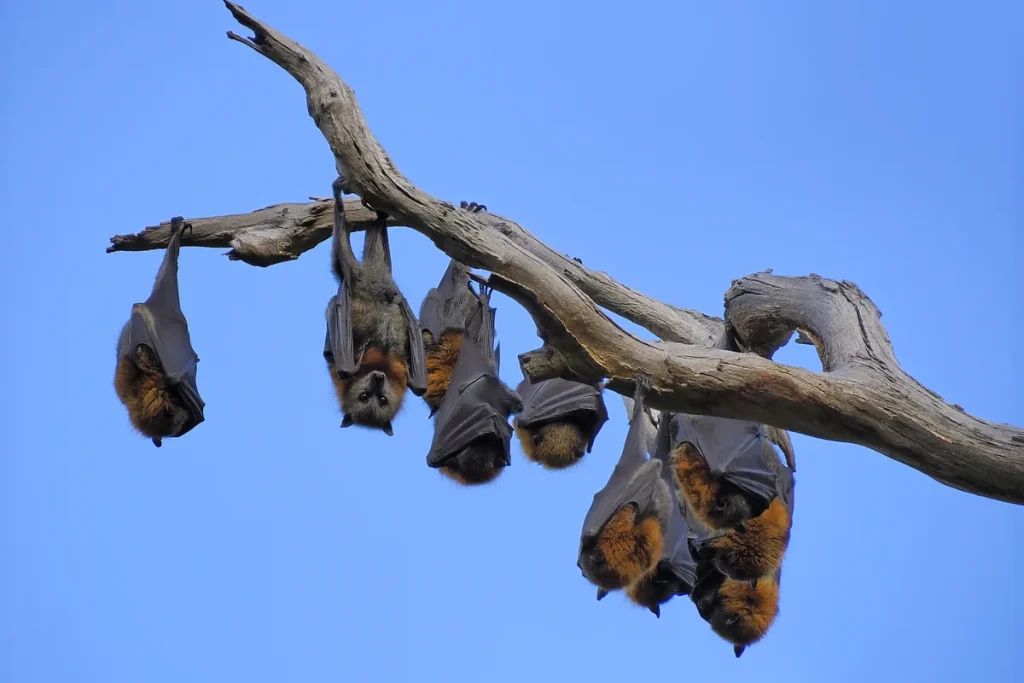
“During food shortage events, flying-foxes typically stay in feed trees during the day instead of returning to their larger colonies,” Emery said. “Consequently, members of the community are seeing flying-foxes remaining in their backyard trees during the day.”
“This situation is expected to return to normal when natural food supplies become more widely available, which will depend on seasonal conditions,” she said.
Glasgow said bats are particularly active during spring and summer.
Leave Bats to Trained Handlers
Glasgow said in the release: “If you see a bat that is injured or in distress, call your local wildlife rescue service and do not touch it. Only trained, protected and vaccinated wildlife handlers should interact with bats.”
A bat’s behaviour or appearance is not a true guide to whether it carries the virus, according to a NSW Health fact sheet.
Why the Warning Matters
The Newcastle Herald reported that NSW’s first confirmed human case was in July last year. A 56-year-old Northern Rivers man was bitten while freeing a trapped bat, and he died despite receiving the full post-exposure treatment, according to the Herald.
The Herald said it was the fourth lyssavirus death in Australia, and that three of them were in Queensland.
According to the Newcastle Herald, up to 6 per cent of bats that have contact with humans are infected with lyssavirus.
“It is incredibly rare for Australian bat lyssavirus to transmit to humans, but once symptoms of lyssavirus start in people who are scratched or bitten by an infected bat, sadly there is no effective treatment,” Glasgow said in the release.
The fact sheet says early symptoms are flu-like, including headache, fever and fatigue. The illness then progresses rapidly to paralysis, delirium, convulsions and death, usually within a week or two.
What To Do If a Bat Bites
“If you are bitten or scratched by a bat, urgent medical assessment is crucial,” Glasgow said in the release.
NSW Health’s advice for a bite or scratch is to:
- Wash the wound for 15 minutes with soap and water.
- Apply an antiseptic with anti-virus action, such as betadine, and let it dry.
- Seek immediate advice from a doctor on post-exposure treatment.
For a bat in distress, the release says to contact WIRES on 1300 094 737 or a local wildlife rescue group, rather than touching it.
Sources: NSW Health, “Avoid touching bats to protect yourself against lyssavirus”, 12 October 2026 (https://www.health.nsw.gov.au/news/Pages/20261012_01.aspx); NSW Health, “Rabies and Australian bat lyssavirus infection fact sheet”, 27 November 2025 (https://www.health.nsw.gov.au/Infectious/factsheets/Pages/rabies-australian-bat-lyssavirus-infection.aspx); Newcastle Herald, “‘Do not touch’: surge sparks warning over deadly virus threat”, 12 October 2026 (https://www.newcastleherald.com.au/story/9366717/rise-in-bat-bites-and-scratches-sparks-warning-from-nsw-health/)
Picture: DmytroLeontyev / Wikimedia Commons, CC BY-SA 4.0.
Grey-headed flying foxes roosting on a bare branch in Melbourne in 2023. Included to illustrate the species; these animals are unconnected with the NSW cases.